Hardscape Repairs
in Prescott-Russell
Settled pavers, sunken sections, failing retaining walls, crumbling steps — we assess the damage, identify the cause, and fix it properly. No surface-level patches that resurface in two seasons.
Fix the Cause, Not Just the Surface
Most hardscape failures come from below — a base that wasn't built deep enough, drainage that was never addressed, or frost heave that's been working on a weak foundation for years. Swapping stones on top of a bad base is a temporary fix. Within a season or two, the same section settles again.
We start every repair assessment by looking at what caused the problem in the first place. Sometimes it's a simple targeted lift-and-relay. Sometimes the base needs to be pulled and rebuilt from scratch. We'll tell you honestly which it is before any work begins — and we'll explain why.
Paver & Interlock Repairs
Settled sections, sunken pavers, and uneven surfaces aren't just cosmetic issues — they're tripping hazards and water management problems. We lift the affected area, assess the base layer, correct any drainage or compaction issues, and relay the interlock flush and tight.
Where individual pavers are cracked or damaged beyond re-use, we source matching replacements where possible. If an exact match isn't available, we'll be upfront about it before we start — no surprises at the end.


Retaining Wall & Step Repairs
A leaning or bulging retaining wall is a structural issue, not a cosmetic one. The most common culprit is water pressure building up behind the wall due to inadequate drainage. We don't just push it back — we disassemble the affected section, address the drainage, and rebuild it correctly so it holds.
Loose, cracked, or shifted steps are repaired to be level, tight, and safe underfoot. Every repair is done to the same standard as a new installation — proper base, proper alignment, no cutting corners because it's "just a repair."


Common Questions About Hardscape Repairs
It depends on the scope and the cause. If the settling is isolated and the base underneath is still solid, a targeted repair is usually the right call. If the base has failed across a large area, or if there are drainage issues that affect the whole surface, a full lift-and-relay may be more cost-effective long term. We'll assess it and give you an honest recommendation — not the more expensive option by default.
The most common causes are an insufficient base depth, poor compaction during the original installation, and inadequate drainage that allows water to erode or shift the base material. Eastern Ontario's freeze-thaw cycles accelerate all of these. A repair that doesn't address the underlying cause will resurface — usually within a year or two.
Often yes, but it depends on the product and how long it's been in place. Manufacturer colors and textures change over time, and weathered pavers look different from new ones. We'll give you a realistic picture of what a match will look like before we proceed so you can make an informed call.
Yes. We assess third-party work regularly — often because the original installation had base or drainage issues that weren't handled properly. We'll give you an honest evaluation of what went wrong and what it takes to fix it correctly.
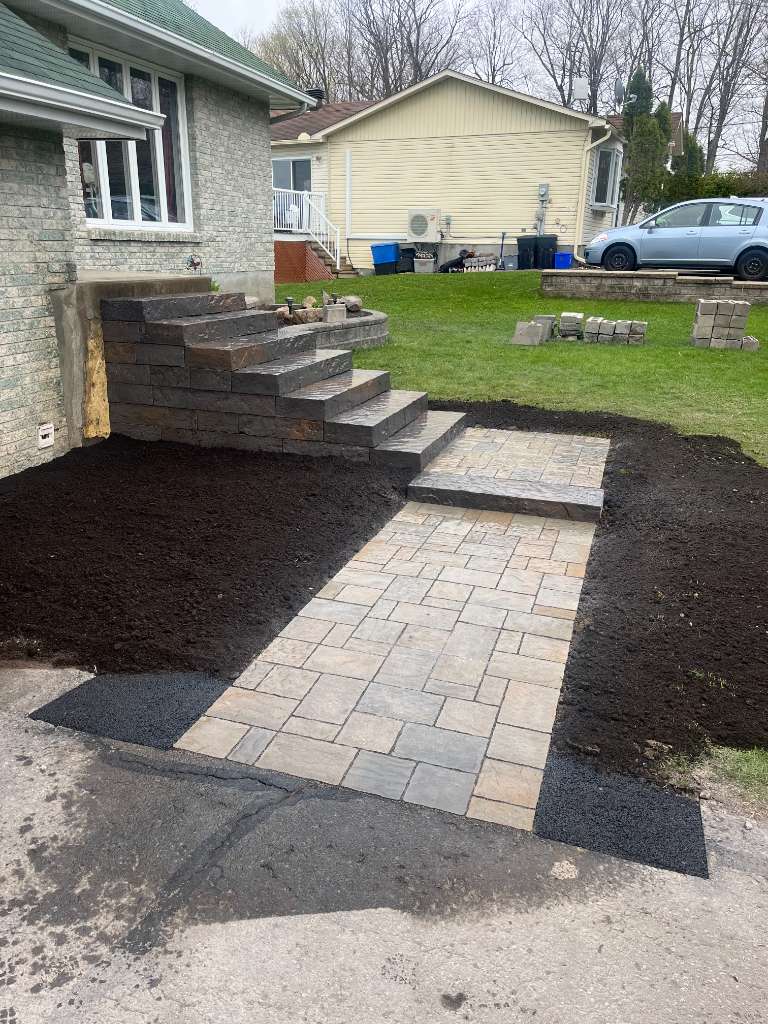
What Every Repair Includes
Whether it's a single sunken section or a failing retaining wall, every repair job follows the same process — assess the cause, fix it properly, and leave the site clean.
- On-site assessment to identify root cause
- Base correction before any surface work
- Proper re-compaction and grading
- Relay of surface pavers, steps, or wall units
- Joint sand re-finishing where disturbed
- Site cleanup and final walkthrough
Honest Work. Happy Homeowners.
Simple Process. Solid Results.
Reach Out
Call, email, or fill out a quote request. We'll get back to you quickly.
Site Visit
We visit your property, assess the space, and talk through your project in detail.
Your Estimate
You receive a detailed, transparent quote — no surprises, no hidden costs.
We Build It
Our team executes the work with quality materials and proper preparation throughout.
Final Walkthrough
We review the finished project together and make sure you're completely satisfied.
Serving Eastern Ontario & Surrounding Areas
Ready to Transform Your Outdoor Space?
No obligation. No guesswork. Just an honest quote from a hands-on team that takes pride in doing the job right — from base prep to final walkthrough.